Introduction
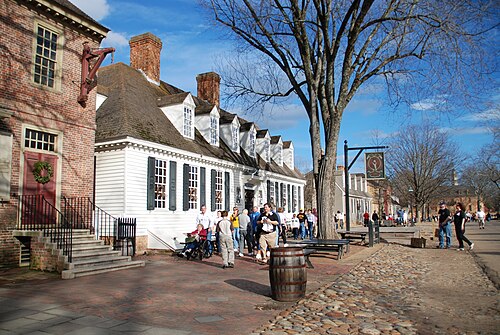
Step onto the brick sidewalks of Duke of Gloucester Street in Colonial Williamsburg, Virginia, and you step straight back into the 1700s! Spanning 301 acres with 88 original 18th-century buildings and hundreds of reconstructed colonial structures, Colonial Williamsburg is the largest in the world!
A foundational concept in this investigation is (pronounced LIV-ing HIS-tuh-ree myoo-ZEE-uhm), which refers to: An outdoor historic site where restored buildings, tradespeople, and interpreters bring a past era to life. Every part of Colonial Williamsburg: Living the 18th Century within ⚓ Virginia's Colonial Birthplace & Coastal Landmarks builds upon this essential concept.
At the Grade 4 level of History (American & Virginia) (⚓ Virginia's Colonial Birthplace & Coastal Landmarks), researchers compare structure, function, and environmental context to see how , , and shape measurable outcomes.
Key Features
Originally called Middle Plantation, the town was renamed Williamsburg in 1699 in honor of King William III when Virginia’s colonial capital moved inland from Jamestown. For 81 eventful years (1699–1780), Williamsburg was the political, cultural, and educational heart of Britain’s largest and most populous American colony—anchored on one end by the College of William & Mary (founded in 1693) and on the other by the grand brick Capitol building.
To analyze these defining traits accurately, specialists examine (hows uv BUR-juh-siz): The elected lower house of Virginia’s colonial legislature that met in the Williamsburg Capitol until the Revolution. Alongside (An outdoor historic site where restored buildings, tradespeople, and interpreters bring a past era to life.), these specialized characteristics set Colonial Williamsburg: Living the 18th Century apart within ⚓ Virginia's Colonial Birthplace & Coastal Landmarks.
Field Observation & Evidence: Researchers studying Colonial Williamsburg: Living the 18th Century observe how physical form matches function in History (American & Virginia). Each observable feature provides a clear advantage that supports stability, survival, or performance across changing conditions.

How It Works
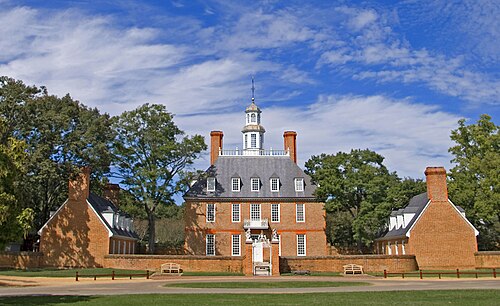
In the 1920s, Reverend Dr. W.A.R. Goodwin—rector of Williamsburg’s historic Bruton Parish Church—teamed up with philanthropist John D. Rockefeller Jr. to rescue and restore the colonial town! Architects, historians, and archaeologists stripped away modern storefronts, studied 18th-century copperplate engravings (like the famous Bodleian Plate found in Oxford, England), and rebuilt the Governor’s Palace, the Capitol, and Raleigh Tavern brick by handmade brick!
This step-by-step process relies on (pronounced uh-POTH-uh-kair-ee), defined as: An 18th-century medical professional who prepared herbal medicines, remedies, and surgical treatments. Each stage of the process prepares the way for the next phase to unfold.
Cause-and-Effect Balance: When conditions remain balanced, and interact inside the to keep the system running smoothly. If any single link in this sequence is disrupted, the entire pace of activity shifts.
In Our World
Today, master tradespeople in Colonial Williamsburg practice more than 20 authentic 18th-century trades using period tools: blacksmiths hammer glowing iron at the forge, printers set lead type on wooden printing presses, and apothecaries, silversmiths, wigmakers, and brickmakers teach visitors how both free and enslaved Virginians built a thriving society and sparked the American Revolution.
Understanding how Colonial Williamsburg: Living the 18th Century functions in real environments also involves (hows uv BUR-juh-siz): The elected lower house of Virginia’s colonial legislature that met in the Williamsburg Capitol until the Revolution. Even when surrounding conditions shift across seasons or regions, the interaction between , House of Burgesses, and helps sustain balance and resilience in the wider environment.
Global & Practical Significance: Williamsburg was Virginia’s capital for 81 years before Governor Thomas Jefferson moved the capital to Richmond in 1780. Furthermore, Dr. Goodwin’s vision and John D. Rockefeller Jr.’s funding created the Colonial Williamsburg Foundation.
Amazing Facts
1. Remarkable Scale & Numbers: More than half of Williamsburg’s 18th-century population (~52%) were enslaved and free Black Virginians whose skilled labor, craftsmanship, and perseverance shaped every part of the colonial capital. This discovery highlights why is central to understanding Colonial Williamsburg: Living the 18th Century.
2. Extraordinary Adaptation & Design: In 1929, researchers discovered a lost 1740s copperplate engraving called the "Bodleian Plate" in Oxford University’s library—showing the exact original architecture of the Capitol, the Governor’s Palace, and the Wren Building! Specialized conditions involving make these adaptations possible.
3. Surprising Scientific & Historical Record: Revolutionary leaders described Duke of Gloucester Street—running 1 mile from the College of William & Mary to the Capitol—as the "most historic avenue in all America"! Over time, processes linked to leave a lasting mark across ⚓ Virginia's Colonial Birthplace & Coastal Landmarks.
Read & Review
Chapter Synthesis: Throughout this investigation of Colonial Williamsburg: Living the 18th Century in History (American & Virginia) (⚓ Virginia's Colonial Birthplace & Coastal Landmarks), we examined its core foundations, defining traits, step-by-step mechanisms, and real-world connections using key terms like , , and .
Academic Vocabulary Review: • (LIV-ing HIS-tuh-ree myoo-ZEE-uhm): An outdoor historic site where restored buildings, tradespeople, and interpreters bring a past era to life. • (hows uv BUR-juh-siz): The elected lower house of Virginia’s colonial legislature that met in the Williamsburg Capitol until the Revolution. • (uh-POTH-uh-kair-ee): An 18th-century medical professional who prepared herbal medicines, remedies, and surgical treatments.
Critical Thinking Check: (1) During which years did Williamsburg serve as the colonial and revolutionary capital of Virginia? — From 1699 (when the capital moved from Jamestown) until 1780 (when it moved to Richmond). (2) Who partnered in the 1920s to launch the historic of Colonial Williamsburg? — Reverend Dr. W.A.R. Goodwin and philanthropist John D. Rockefeller Jr..