Introduction
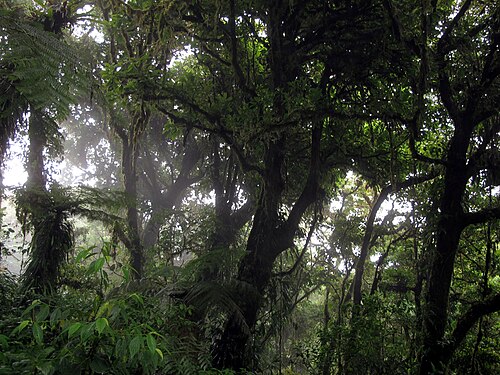
Climb high up the steep slopes of tropical and subtropical mountains—between 1,500 and 3,000 meters (5,000 to 10,000 feet) elevation—and you walk straight into the clouds! Here live two of Earth’s most enchanting mountain biomes: the dripping, emerald-green Cloud Forests of Central and South America and the misty Temperate Jungles of China’s mountain ranges.
A foundational concept in this investigation is (pronounced klowd FOR-ist), which refers to: A high-elevation tropical or subtropical mountain forest enveloped in persistent, ground-level cloud mist and fog. Every part of Cloud Forests & Jungles within 🌴 World Biomes: Savannas, Jungles & Rainforests builds upon this essential concept.
In Grade 5 advanced nonfiction inquiry across Nature & Environment (🌴 World Biomes: Savannas, Jungles & Rainforests), synthesizing primary evidence around , , and reveals how complex systems operate and adapt over time.
Key Features
In a (such as Costa Rica’s famous Monteverde Cloud Forest or the Yungas of the Andes), warm, moist air blowing in from the ocean hits cool mountain slopes and condenses into a permanent blanket of low-level fog and mist! Every single tree branch is draped in thick green carpets of moss, lichens, tree ferns, bromeliads, and miniature orchids—one single cloud-forest tree can host over 100 species of epiphytes!
To analyze these defining traits accurately, specialists examine (hor-ih-ZON-tuhl pri-sip-ih-TAY-shuhn): Moisture captured directly from blowing fog and clouds as droplets condense onto mossy branches and leaves ("cloud stripping"). Alongside (A high-elevation tropical or subtropical mountain forest enveloped in persistent, ground-level cloud mist and fog.), these specialized characteristics set Cloud Forests & Jungles apart within 🌴 World Biomes: Savannas, Jungles & Rainforests.
Field Observation & Evidence: Researchers studying Cloud Forests & Jungles observe how physical form matches function in Nature & Environment. Each observable feature provides a clear advantage that supports stability, survival, or performance across changing conditions.

How It Works
Cloud forests work like giant high-altitude sponges through a process called (cloud stripping)! Even when it isn’t raining, millions of mossy leaves and aerial roots comb microscopic water droplets right out of the passing fog, dripping steady streams of pure mountain water into the soil to feed the headwaters of major rivers below.
This step-by-step process relies on (pronounced SOO-doh thum), defined as: An enlarged radial sesamoid wrist bone in Giant Pandas and Red Pandas that functions like an opposable thumb for gripping . Each stage of the process prepares the way for the next phase to unfold.
Cause-and-Effect Balance: When conditions remain balanced, and interact inside the to keep the system running smoothly. If any single link in this sequence is disrupted, the entire pace of activity shifts.
In Our World
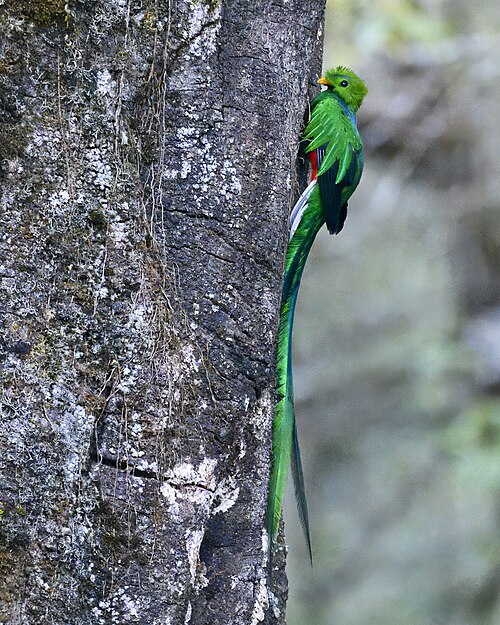
In Latin America’s cloud forests, the iridescent emerald-and-crimson Resplendent Quetzal—a bird revered by the ancient Maya and Aztec peoples—feeds on wild mini-avocados, while the Spectacled Bear (Andean bear, South America’s only native bear!) climbs mossy trees to eat bromeliad hearts. Across the Pacific in the misty mountain forests of Sichuan, China, Giant Pandas and Red Pandas munch on fast-growing bamboo—which is not a tree at all, but the tallest member of the grass family, capable of growing up to 90 centimeters (35 inches) in a single day!
Understanding how Cloud Forests & Jungles functions in real environments also involves (hor-ih-ZON-tuhl pri-sip-ih-TAY-shuhn): Moisture captured directly from blowing fog and clouds as droplets condense onto mossy branches and leaves ("cloud stripping"). Even when surrounding conditions shift across seasons or regions, the interaction between , Horizontal Precipitation, and helps sustain balance and resilience in the wider environment.
Global & Practical Significance: Cloud stripping () turns misty mountain forests into vital freshwater towers for downstream valleys. Furthermore, is a giant woody grass with hollow jointed culms that elongates faster than any other land plant.
Amazing Facts
1. Remarkable Scale & Numbers: is the fastest-growing plant on Earth—certain giant bamboo species can shoot upward by 91 centimeters (3 feet) in 24 hours (you can almost watch it grow)! This discovery highlights why is central to understanding Cloud Forests & Bamboo Jungles.
2. Extraordinary Adaptation & Design: A Giant Panda spends 12 to 14 hours every single day eating up to 38 kilograms (84 pounds) of , using an enlarged wrist bone ("") as a sixth finger to grip bamboo stalks! Specialized conditions involving make these adaptations possible.
3. Surprising Scientific & Historical Record: Male Resplendent Quetzals in Costa Rica’s cloud forests grow shimmering green tail streamers up to 1 meter (3 feet) long—three times longer than their own bodies! Over time, processes linked to leave a lasting mark across 🌴 World Biomes: Savannas, Jungles & Rainforests.
Read & Review
Chapter Synthesis: Throughout this investigation of Cloud Forests & Jungles in Nature & Environment (🌴 World Biomes: Savannas, Jungles & Rainforests), we examined its core foundations, defining traits, step-by-step mechanisms, and real-world connections using key terms like , , and .
Academic Vocabulary Review: • (klowd FOR-ist): A high-elevation tropical or subtropical mountain forest enveloped in persistent, ground-level cloud mist and fog. • (hor-ih-ZON-tuhl pri-sip-ih-TAY-shuhn): Moisture captured directly from blowing fog and clouds as droplets condense onto mossy branches and leaves ("cloud stripping"). • (SOO-doh thum): An enlarged radial sesamoid wrist bone in Giant Pandas and Red Pandas that functions like an opposable thumb for gripping .
Critical Thinking Check: (1) How does a mountain "" capture water even on days when rain is not falling ("")? — Thick carpets of moss, orchids, and leaves on the trees comb water droplets directly out of passing clouds and fog. (2) What plant family does giant actually belong to, and how fast can the fastest bamboo grow? — The grass family (Poaceae), and it can grow up to 91 centimeters (3 feet) in a single 24-hour day.