
Introduction
In an era when most action movies shoot actors standing in front of a green wall in an indoor studio and add explosions on a computer later, British-American director Christopher Nolan (born 1970) prefers to build the impossible in the real physical world and film it with giant 65mm IMAX film cameras! Whether building a rotating 360-degree hotel hallway so actors can fight in zero gravity for Inception (2010), working with a Nobel Prize–winning astrophysicist to calculate the real mathematics of a supermassive black hole for Interstellar (2014), or winning Best Picture and Best Director at the Academy Awards for Oppenheimer (2023), Nolan blends hard science, time, and giant-screen cinema!
An important word to know in this book is (EYE-maks SEV-uhn-tee MIL-ih-mee-ter). IMAX 70mm Film Format means: The world’s highest-resolution motion picture film format, running wide 70mm film horizontally through the camera to capture images nearly 10 times larger than standard 35mm cinema film. Learning about IMAX 70mm Film Format helps us understand how Christopher Nolan: IMAX Cameras, Time & Science on Screen fits into 🎬 Film, Television, Directors & Storytelling Titans.
Key Features
Born on July 30, 1970, in Westminster, London, England, to a British father (Brendan) and an American mother (Christina, a flight attendant and English teacher from Evanston, Illinois), young Christopher split his childhood between London and Chicago. At age seven, after seeing Star Wars and watching NASA Apollo moon-landing footage, he borrowed his father’s Super 8 movie camera and began filming stop-motion space adventures using his action figures and clay! Instead of attending a traditional film school, Nolan studied English Literature at University College London (UCL)—choosing UCL specifically because the university had a student Film Society with 16mm cameras and an editing room where he could make movies every weekend!
Scientists and explorers also look closely at (PRAK-tih-kuhl ih-FEKTS), which means: Building and filming real physical sets, rotating corridors, and miniature models right in front of the camera lens rather than adding computer-generated graphics later. These special traits make Christopher Nolan: IMAX Cameras, Time & Science on Screen easy to spot and study.
How It Works
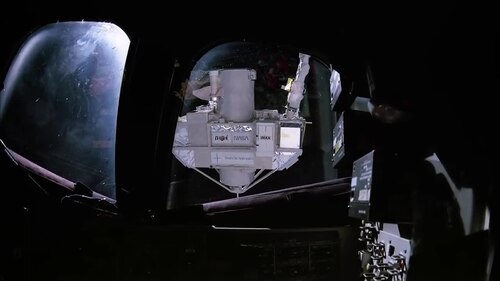
Why does Christopher Nolan love shooting on 70mm IMAX celluloid film—the largest motion-picture film format in history, whose horizontal frames are nearly 10 times larger than standard 35mm movie film and offer up to 18K equivalent ? Because watching an IMAX film projection fills a theater screen eight stories tall, immersing the audience’s peripheral vision! Even more remarkably, for The Dark Knight (2008), Nolan became the very first filmmaker in history to shoot a major Hollywood feature film with IMAX cameras (after engineers told him the 60-pound cameras—previously used only for short nature and space documentaries!—were too heavy and loud for feature movies)!
Here is another helpful term: (tym dy-LAY-shuhn). It means: In Einstein’s General Theory of Relativity (featured in Interstellar), immense gravity near a black hole bends light rays like a lens and causes time itself to tick more slowly than far away in space. Step by step, and Gravitational Time Dilation & Lensing work together in nature.
In Our World
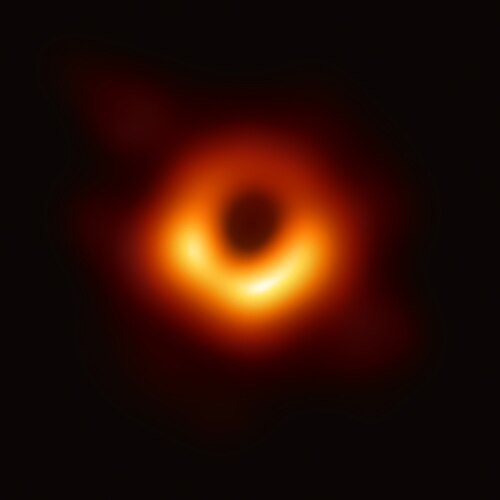
How did Interstellar (2014) actually lead to a published peer-reviewed astrophysics discovery? When Nolan teamed up with Caltech theoretical physicist Dr. Kip Thorne (who later won the 2017 Nobel Prize in Physics!) to visualize the gargantuan spinning black hole "Gargantua", Thorne wrote down Einstein’s general relativity gravitational-lensing equations and fed them into visual-effects computers. The computers revealed that a spinning black hole bends light from behind its accretion disk into a glowing halo above and below its shadow—a sight no human had ever seen until the Event Horizon Telescope photographed a real black hole (M87\) five years later in 2019! In 2024, following the triumph of Oppenheimer*, Nolan was knighted Sir Christopher Nolan by King Charles III for his contributions to cinema!
Understanding how Christopher Nolan: IMAX Cameras, Time & Science on Screen works in our world also involves (PRAK-tih-kuhl ih-FEKTS): Building and filming real physical sets, rotating corridors, and miniature models right in front of the camera lens rather than adding computer-generated graphics later. Even when surrounding conditions shift across seasons or regions, the interaction between , Practical In-Camera Effects, and helps sustain balance and resilience in the wider environment.
Amazing Facts
Amazing Fact #1: When Christopher Nolan and Nobel Prize–winning physicist Dr. Kip Thorne fed Einstein’s real equations into visual-effects computers to render the black hole Gargantua in Interstellar (2014), the simulation was so scientifically accurate that Kip Thorne and the visual-effects team published two scientific papers in peer-reviewed physics and computer-graphics journals!
Amazing Fact #2: For the famous rotating-hallway zero-gravity fight scene in Inception (2010), Nolan refused to use CGI wires—instead, engineers built a 100-foot-long steel hotel corridor mounted inside giant spinning concentric rings (like a human hamster wheel!) that rotated 360 degrees at 8 RPM while actor Joseph Gordon-Levitt and the camera crew tumbled inside!
Amazing Fact #3: Just like Mark Zuckerberg, Christopher Nolan has red-green colorblindness—which is one reason his films use striking high-contrast deep blues, golds, and architectural shadows!
Read & Review
Let's review what we discovered about Christopher Nolan: IMAX Cameras, Time & Science on Screen! In this book, we explored how , , and connect to 🎬 Film, Television, Directors & Storytelling Titans.
Key Question #1: What historic cinema-technology milestone did Christopher Nolan achieve while filming The Dark Knight in 2008? Answer: He became the first director ever to shoot action sequences of a major Hollywood feature film using giant 65mm/70mm IMAX cameras. Before The Dark Knight (2008), heavy IMAX cameras had only been used for short museum, space, and nature documentaries.
Key Question #2: How did Christopher Nolan film the famous scene in Inception (2010) where characters walk on the walls and ceiling of a hotel hallway while gravity spins around them? Answer: Engineers built a real 100-foot-long hotel hallway inside giant motorized steel rings that rotated a full 360 degrees while the actors and cameras were inside. Nolan’s team engineered a full-scale revolving centrifuge corridor so the actors physically walked across the walls and ceiling on camera.