Introduction
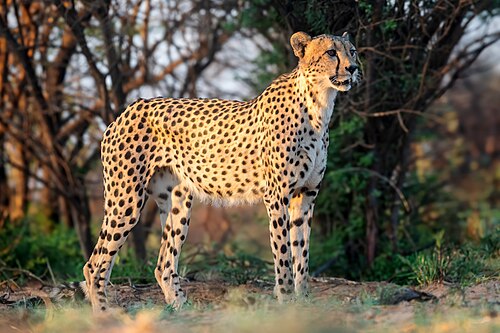
Clocked at breathtaking speeds of 105 to 112 km/h (65 to 70 mph), the Cheetah (Acinonyx_jubatus) is the fastest land animal on Earth! Built like a Formula 1 race car covered in golden spotted fur, a sprinting cheetah can accelerate from a standing start to 97 km/h (60 mph) in just 3 seconds—faster than most sports cars!
An important word to know in this book is (air-oh-dy-NAM-ik). Aerodynamic means: Shaped to slice smoothly through the air with minimal wind resistance during high-speed sprints. Learning about Aerodynamic helps us understand how Cheetahs: Built for 70 MPH Speed fits into 🦁 Big Cats & Apex Land Predators.
Key Features
Every inch of a cheetah’s anatomy is engineered for velocity: it has a small head, enlarged nasal passages, oversized lungs and heart to pump oxygen, long slender legs, and a deep chest with a narrow waist. Below its amber eyes, two black "tear marks" () run down its cheeks to its mouth, absorbing harsh midday sun glare just like the black eye-paint worn by football and baseball players!
Scientists and explorers also look closely at (MAY-ler strypes), which means: The black tear-like markings running from a cheetah’s eyes down its cheeks that reduce bright sunlight glare. These special traits make Cheetahs: Built for 70 MPH Speed easy to spot and study.
How It Works
A cheetah’s secret weapon is its hyper-flexible spine, which coils like a steel spring as its hind legs reach far in front of its front legs, then uncoils to propel the cat across 7 to 8 meters (23 to 26 feet) in a single stride! At top speed, the cheetah spends more than half its time completely airborne. Unlike all other cats whose claws retract into sheaths, a cheetah’s blunt, semi-non-retractable claws stay out like track cleats to grip the ground, while its long, muscular, flat-tipped tail swings left and right like a boat for razor-sharp turns at 60 mph!
Here is another helpful term: (sem-ee-rih-TRAK-tuh-buhl klawz). It means: Blunt claws that remain exposed outside the paw pads like running cleats to provide traction at high speed. Step by step, and Semi-Retractable Claws work together in nature.
In Our World
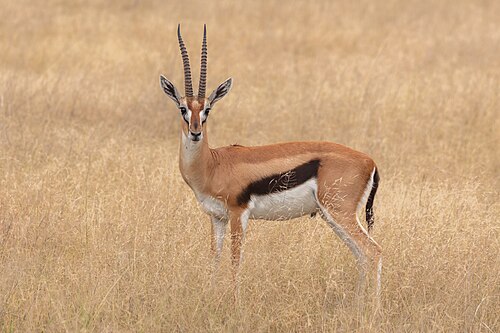
Because night predators like lions and hyenas steal cheetah kills, cheetahs hunt during the bright daytime across African grasslands, chasing nimble Thomson’s gazelles and impalas. Unlike the four roaring Panthera cats (lion, tiger, jaguar, leopard), cheetahs have a fixed, one-piece hyoid bone in their throat—so cheetahs cannot roar! Instead, they purr loudly, chirp like birds to call their cubs, and stutter-bark.
Understanding how Cheetahs: Built for 70 MPH Speed works in our world also involves (MAY-ler strypes): The black tear-like markings running from a cheetah’s eyes down its cheeks that reduce bright sunlight glare. Even when surrounding conditions shift across seasons or regions, the interaction between , Malar Stripes, and helps sustain balance and resilience in the wider environment.
Amazing Facts
Amazing Fact #1: A cheetah can accelerate from 0 to 97 km/h (0 to 60 mph) in 3 seconds flat, covering 7.6 meters (25 feet) per stride and taking 4 strides every second!
Amazing Fact #2: Unlike lions and tigers that roar, cheetahs communicate with high-pitched bird-like chirps that can be heard a mile away—and they purr when happy!
Amazing Fact #3: A cheetah’s semi-non-retractable claws work just like a sprinter’s spiked track cleats, digging into dirt during explosive acceleration.
Read & Review
Let's review what we discovered about Cheetahs: Built for 70 MPH Speed! In this book, we explored how , , and connect to 🦁 Big Cats & Apex Land Predators.
Key Question #1: How fast can a cheetah run, and how quickly can it accelerate from 0 to 60 mph? Answer: Top speed of 65–70 mph, accelerating from 0 to 60 mph in just 3 seconds. A flexible spine, long legs, and cleats-like claws make the cheetah the fastest land mammal on Earth.
Key Question #2: How do a cheetah’s claws and tail work together when chasing a zigzagging gazelle? Answer: Its semi-non-retractable claws grip the dirt like track cleats while its long tail swings like a to counterbalance sharp turns. Exposed claws provide ground traction and the muscular tail shifts the cheetah’s center of gravity during sudden turns.