Introduction
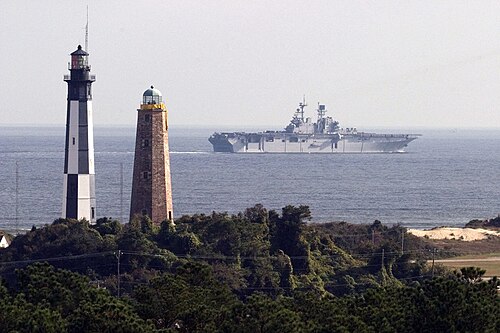
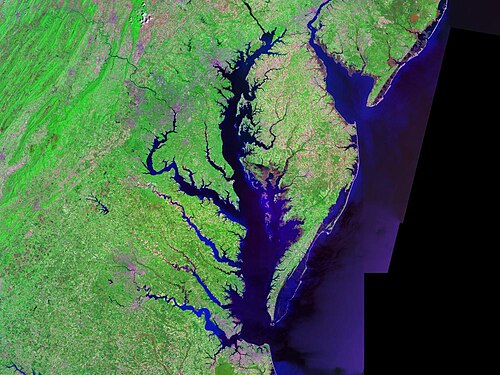
Where the salty waves of the Atlantic Ocean meet the wide entrance of the Chesapeake Bay in Virginia Beach stands the Cape Henry Lighthouse—the very first federal construction project authorized by the newly formed United States government and President George Washington!
A foundational concept in this investigation is (pronounced furst LAN-ding), which refers to: The April 26, 1607 arrival of the Jamestown English colonists at Cape Henry in Virginia Beach before they sailed up the James River. Every part of Cape Henry Lighthouse: Guardian of the Chesapeake Bay within ⚓ Virginia's Colonial Birthplace & Coastal Landmarks builds upon this essential concept.
At the Grade 4 level of History (American & Virginia) (⚓ Virginia's Colonial Birthplace & Coastal Landmarks), researchers compare structure, function, and environmental context to see how , , and shape measurable outcomes.
Key Features
Cape Henry is sacred ground in American history for two reasons. First, on April 26, 1607, after 144 days at sea, Captain Christopher Newport and the Jamestown colonists made their "" on the sandy dunes of Cape Henry, planting a wooden cross to give thanks for their safe crossing and naming the headland after Henry Frederick, Prince of Wales, before sailing up the James River to Jamestown!
To analyze these defining traits accurately, specialists examine (uh-KWY-uh kreek SAND-stohn): Durable freestone quarried in Stafford County, Virginia, used to construct the 1792 Cape Henry Lighthouse, the White House, and the U.S. Capitol. Alongside (The April 26, 1607 arrival of the Jamestown English colonists at Cape Henry in Virginia Beach before they sailed up the James River.), these specialized characteristics set Cape Henry Lighthouse: Guardian of the Chesapeake Bay apart within ⚓ Virginia's Colonial Birthplace & Coastal Landmarks.
Field Observation & Evidence: Researchers studying Cape Henry Lighthouse: Guardian of the Chesapeake Bay observe how physical form matches function in History (American & Virginia). Each observable feature provides a clear advantage that supports stability, survival, or performance across changing conditions.
How It Works
Second, because shifting sandbars and strong currents at the mouth of the Chesapeake Bay wrecked so many merchant ships, the very first U.S. Congress passed the Lighthouse Act of 1789. President George Washington personally approved the contracts, while Secretary of the Treasury Alexander Hamilton oversaw funding! Completed in October 1792 by New York master mason John McComb Jr., the octagonal 27-meter (90-foot) tower was built from —the exact same Virginia stone used to build the White House and the U.S. Capitol!
This step-by-step process relies on (pronounced fray-NEL lenz), defined as: A beehive-shaped glass lighthouse lens made of concentric prism rings that focuses a lamp’s flame into a powerful beam visible for miles at sea. Each stage of the process prepares the way for the next phase to unfold.
Cause-and-Effect Balance: When conditions remain balanced, and interact inside the to keep the system running smoothly. If any single link in this sequence is disrupted, the entire pace of activity shifts.
In Our World
Originally fueled by whale oil (and later colza oil and kerosene) inside parabolic reflectors and a gleaming , the 1792 sandstone lighthouse guided mariners for 89 years! When lightning cracks in the old sandstone raised safety concerns, engineers built a second, taller 1881 cast-iron lighthouse painted in bold black-and-white stripes just 107 meters (350 feet) away! Today, both historic lighthouses stand side-by-side at Fort Story in Virginia Beach, and visitors can climb the 191 iron steps of the 1792 tower for sweeping views of the Atlantic and Chesapeake Bay.
Understanding how Cape Henry Lighthouse: Guardian of the Chesapeake Bay functions in real environments also involves (uh-KWY-uh kreek SAND-stohn): Durable freestone quarried in Stafford County, Virginia, used to construct the 1792 Cape Henry Lighthouse, the White House, and the U.S. Capitol. Even when surrounding conditions shift across seasons or regions, the interaction between , Aquia Creek Sandstone, and helps sustain balance and resilience in the wider environment.
Global & Practical Significance: Authorized under the Lighthouse Act of 1789 and completed in 1792, Cape Henry Light was the young republic’s first federal construction project. Furthermore, The colonists landed at Cape Henry on April 26, 1607, erected a wooden cross, and explored the coast before sailing up the James River to Jamestown.
Amazing Facts
1. Remarkable Scale & Numbers: The 1792 Cape Henry Lighthouse was the FIRST construction project ever funded and built by the federal government under the U.S. Constitution! This discovery highlights why is central to understanding Cape Henry Lighthouse: Guardian of the Chesapeake Bay.
2. Extraordinary Adaptation & Design: The blocks used to build Cape Henry Lighthouse came from Stafford County, Virginia—the exact same quarries that supplied stone for the U.S. Capitol and the White House! Specialized conditions involving Aquia Creek Sandstone make these adaptations possible.
3. Surprising Scientific & Historical Record: When you visit Cape Henry today, you see TWO lighthouses standing just 350 feet apart: the octagonal 1792 sandstone tower and the black-and-white striped 1881 cast-iron tower (which still flashes an automated Coast Guard beam 17 miles out to sea)! Over time, processes linked to leave a lasting mark across ⚓ Virginia's Colonial Birthplace & Coastal Landmarks.
Read & Review
Chapter Synthesis: Throughout this investigation of Cape Henry Lighthouse: Guardian of the Chesapeake Bay in History (American & Virginia) (⚓ Virginia's Colonial Birthplace & Coastal Landmarks), we examined its core foundations, defining traits, step-by-step mechanisms, and real-world connections using key terms like , , and .
Academic Vocabulary Review: • (furst LAN-ding): The April 26, 1607 arrival of the Jamestown English colonists at Cape Henry in Virginia Beach before they sailed up the James River. • (uh-KWY-uh kreek SAND-stohn): Durable freestone quarried in Stafford County, Virginia, used to construct the 1792 Cape Henry Lighthouse, the White House, and the U.S. Capitol. • (fray-NEL lenz): A beehive-shaped glass lighthouse lens made of concentric prism rings that focuses a lamp’s flame into a powerful beam visible for miles at sea.
Critical Thinking Check: (1) Why does the 1792 Cape Henry Lighthouse hold a special place in the history of the United States government? — It was the very first federal construction project authorized by the first U.S. Congress and signed by President George Washington. (2) What historic event happened on the sand dunes of Cape Henry on April 26, 1607? — The "," when Captain Christopher Newport and the 104 Jamestown colonists first came ashore in Virginia after crossing the Atlantic.