Introduction
Before 1869, traveling from New York to California meant either a 5-month trek in a covered wagon or a 6-month ocean voyage around the tip of South America. Then came one of the greatest engineering feats of the 19th century: the First Railroad, which cut the coast-to-coast journey to just 7 days!
An important word to know in this book is (trans-kon-tuh-NEN-tuhl). Transcontinental means: Stretching or crossing all the way across a continent from one ocean coast to the other. Learning about Transcontinental helps us understand how Building the Transcontinental Railroad fits into The Underground Railroad & Westward Expansion.
Key Features
Signed into law by President Abraham Lincoln with the Pacific Railway Act of 1862, the 3,069-kilometer (1,911-mile) railroad was built by two competing companies racing toward each other: the Union Pacific building westward from Omaha, Nebraska, across the Great Plains, and the Central Pacific building eastward from Sacramento, California, over the towering granite cliffs of the Sierra Nevada mountains.
Scientists and explorers also look closely at (PROM-uhn-tor-ee SUM-it), which means: The historic meeting point in northern Utah where the Central Pacific and Union Pacific railroads joined tracks on May 10, 1869. These special traits make Building the Railroad easy to spot and study.
How It Works
Every single wooden crosstie and 500-pound iron rail was laid by hand with sledgehammers, picks, and shovels! Facing a severe labor shortage in California, the Central Pacific hired more than 12,000 Chinese immigrant workers, whose incredible skill, courage, and teamwork blasted 15 tunnels through solid Sierra Nevada granite—sometimes advancing only 30 centimeters (1 foot) per day through winter blizzards!
Here is another helpful term: (STAN-derd tyme zohnz). It means: Geographic regions that keep the same clock time, created in 1883 so train schedules wouldn’t be confused by hundreds of local sun times. Step by step, and Standard Time Zones work together in nature.
In Our World
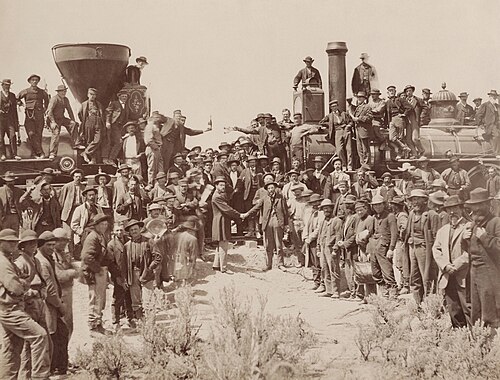
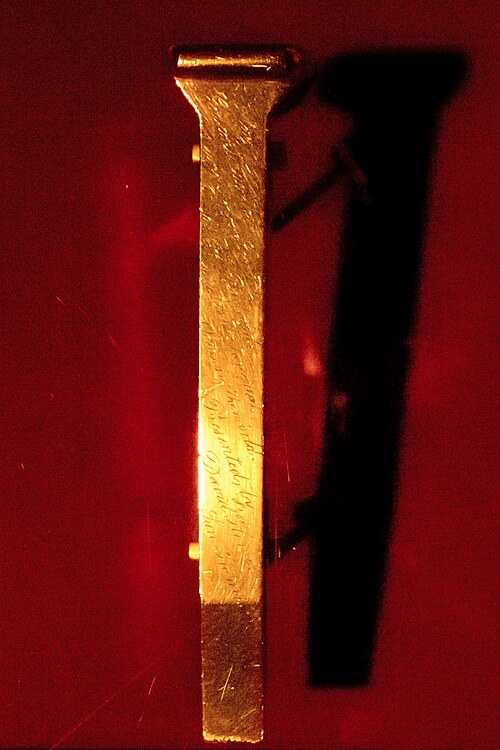
On May 10, 1869, the Union Pacific and Central Pacific tracks finally met at , Utah! As telegraph operators tapped the word "D-O-N-E" coast to coast, officials drove the ceremonial 17.6-karat Golden Spike, uniting the Atlantic and Pacific coasts by rail for the first time in history.
Understanding how Building the Railroad works in our world also involves (PROM-uhn-tor-ee SUM-it): The historic meeting point in northern Utah where the Central Pacific and Union Pacific railroads joined tracks on May 10, 1869. Even when surrounding conditions shift across seasons or regions, the interaction between Transcontinental, Promontory Summit, and helps sustain balance and resilience in the wider environment.
Amazing Facts
Amazing Fact #1: Once the Railroad opened in 1869, a trip across the United States that used to take 5 to 6 months took just ONE week!
Amazing Fact #2: On April 28, 1869, Central Pacific track crews—mostly Chinese workers and Irish rail handlers—set an all-time world record by laying 10 miles and 56 feet of railroad track in a single 12-hour day!
Amazing Fact #3: Before railroads, every town set its clocks by the local sun; in 1883, railroads introduced the four (Eastern, Central, Mountain, and Pacific) we still use today!
Read & Review
Let's review what we discovered about Building the Railroad! In this book, we explored how Transcontinental, , and connect to The Underground Railroad & Westward Expansion.
Key Question #1: How did the completion of the Railroad in 1869 change travel across the United States? Answer: It cut the coast-to-coast journey from 5–6 months by wagon or ship down to about 7 days by train. Rail travel revolutionized coast-to-coast transportation, mail, and commerce.
Key Question #2: Where did the Central Pacific and Union Pacific railroads meet on May 10, 1869, to drive the ceremonial Golden Spike? Answer: , Utah. The two rail lines met at Promontory Summit, Utah, completing the coast-to-coast link.