Introduction
Imagine squeezing a star ten times heavier than our Sun into a sphere no wider than a city! Its gravity becomes so intense that nothing—not even a beam of light traveling at 300,000 kilometers per second—can escape its pull. Scientists call this cosmic object a black hole.
A foundational concept in this investigation is (pronounced ih-VENT huh-RY-zuhn), which refers to: The spherical boundary around a black hole beyond which gravity is so strong that not even light can escape. Every part of Black Holes Made Simple within Space & Astronomy builds upon this essential concept.
At the Grade 4 level of Science & Technology (Space & Astronomy), researchers compare structure, function, and environmental context to see how , , and shape measurable outcomes.
Key Features
A black hole is not a cosmic vacuum cleaner sucking up the whole universe; from far away, its gravity pulls just like any normal star of the same mass. The boundary of no return around a black hole is called the . Once anything crosses the event horizon, it can never come back out.
To analyze these defining traits accurately, specialists examine (soo-per-NOH-vuh): The colossal explosion of a massive star at the end of its life, which can leave behind a neutron star or black hole. Alongside (The spherical boundary around a black hole beyond which gravity is so strong that not even light can escape.), these specialized characteristics set Black Holes Made Simple apart within Space & Astronomy.
Field Observation & Evidence: Researchers studying Black Holes Made Simple observe how physical form matches function in Science & Technology. Each observable feature provides a clear advantage that supports stability, survival, or performance across changing conditions.
How It Works
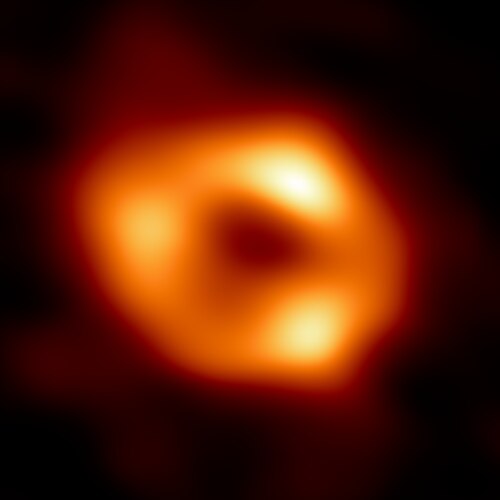
Most stellar-mass black holes form when a giant star (at least 20 times heavier than the Sun) runs out of nuclear fuel, explodes as a brilliant , and its heavy core collapses inward under its own gravity. Meanwhile, supermassive black holes millions or billions of times heavier than the Sun sit at the centers of almost all large galaxies—including Sagittarius A* at the center of our Milky Way!
This step-by-step process relies on (pronounced uh-KREE-shuhn disk), defined as: A swirling, glowing ring of superheated gas and dust orbiting just outside a black hole’s . Each stage of the process prepares the way for the next phase to unfold.
Cause-and-Effect Balance: When conditions remain balanced, and interact inside the to keep the system running smoothly. If any single link in this sequence is disrupted, the entire pace of activity shifts.
In Our World
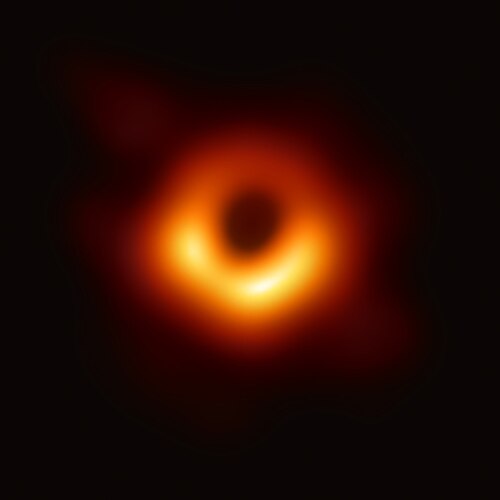
If black holes are invisible, how do astronomers find them? By watching how their gravity whips nearby stars around in fast orbits, and by photographing the glowing orange ring of superheated gas (the ) swirling outside the —first imaged by the Event Horizon Telescope in 2019!
Understanding how Black Holes Made Simple functions in real environments also involves (soo-per-NOH-vuh): The colossal explosion of a massive star at the end of its life, which can leave behind a neutron star or black hole. Even when surrounding conditions shift across seasons or regions, the interaction between , Supernova, and helps sustain balance and resilience in the wider environment.
Global & Practical Significance: Inside the , the escape speed is greater than the speed of light. Furthermore, X-rays from the superheated and the orbits of nearby stars reveal a black hole’s presence and mass.
Amazing Facts
1. Remarkable Scale & Numbers: If you got too close to a small black hole, gravity would pull harder on your feet than your head, stretching you out like a noodle—a real physics effect scientists actually call "spaghettification"! This discovery highlights why is central to understanding Black Holes Made Simple.
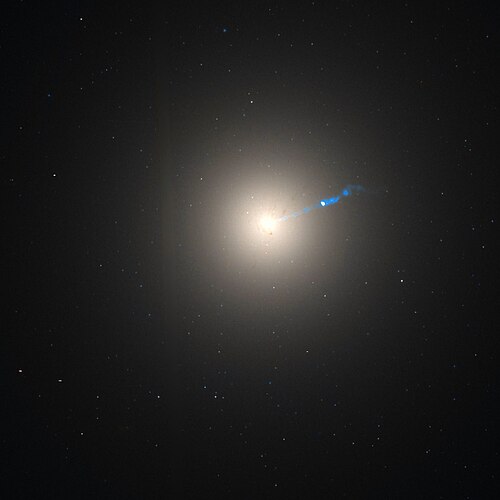
2. Extraordinary Adaptation & Design: In 2019, the Telescope linked radio dishes across Earth to take the first real picture of a black hole’s shadow in galaxy M87. Specialized conditions involving make these adaptations possible.
3. Surprising Scientific & Historical Record: Our Sun will never turn into a black hole—it is too small and will instead end its life billions of years from now as a quiet white dwarf star. Over time, processes linked to leave a lasting mark across Space & Astronomy.
Read & Review
Chapter Synthesis: Throughout this investigation of Black Holes Made Simple in Science & Technology (Space & Astronomy), we examined its core foundations, defining traits, step-by-step mechanisms, and real-world connections using key terms like , , and .
Academic Vocabulary Review: • (ih-VENT huh-RY-zuhn): The spherical boundary around a black hole beyond which gravity is so strong that not even light can escape. • (soo-per-NOH-vuh): The colossal explosion of a massive star at the end of its life, which can leave behind a neutron star or black hole. • (uh-KREE-shuhn disk): A swirling, glowing ring of superheated gas and dust orbiting just outside a black hole’s event horizon.
Critical Thinking Check: (1) What is the "" of a black hole? — The boundary around a black hole where escape velocity exceeds the speed of light—the point of no return. (2) How can astronomers detect a black hole if no light escapes from inside it? — By observing the glowing of hot gas swirling around it and its gravitational pull on nearby stars.