Introduction
Across 639 acres of rolling green hills and white marble headstones in Arlington County, Virginia—directly across the Potomac River from the Lincoln Memorial in Washington, D.C.—lies Arlington National Cemetery, America’s most sacred military shrine, where more than 400,000 service members, veterans, astronauts, and national leaders from every American conflict since the Revolutionary War are laid to rest.
A foundational concept in this investigation is (pronounced toom uv thuh un-NOHN SOHL-jer), which refers to: The white marble monument at Arlington National Cemetery dedicated in 1921 to honor unidentified American service members who gave their lives in war. Every part of Arlington National Cemetery: America's Hallowed Ground within 🔔 Revolution, Statehood & Civil War Turning Points builds upon this essential concept.
In Grade 3 History (American & Virginia) studies (🔔 Revolution, Statehood & Civil War Turning Points), understanding how , , and work together helps explain real-world patterns. As you read each chapter, notice how these key terms connect structure, process, and environment.
Key Features
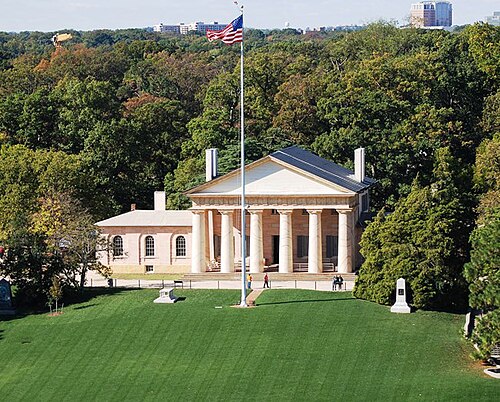
High on the central hill of the cemetery stands —a grand Greek Revival mansion with eight massive Doric columns built between 1802 and 1818 by George Washington Parke Custis (step-grandson of President George Washington) and enslaved workers (including Selina Gray) as a living museum to honor George Washington! In 1831, Custis’s daughter Mary Anna Randolph Custis married U.S. Army Lieutenant Robert E. Lee right inside the parlor of Arlington House, and the estate was their home for 30 years until the Civil War broke out in April 1861.
To analyze these defining traits accurately, specialists examine (thuh ohld gard): The 3rd U.S. Infantry Regiment (founded in 1784, the oldest active-duty infantry unit in the Army), whose Sentinels guard the Tomb 24 hours a day, 365 days a year. Alongside (The white marble monument at Arlington National Cemetery dedicated in 1921 to honor unidentified American service members who gave their lives in war.), these specialized characteristics set Arlington National Cemetery: America's Hallowed Ground apart within 🔔 Revolution, Statehood & Civil War Turning Points.
Field Observation & Evidence: Researchers studying Arlington National Cemetery: America's Hallowed Ground observe how physical form matches function in History (American & Virginia). Each observable feature provides a clear advantage that supports stability, survival, or performance across changing conditions.
How It Works
How did a private Virginia estate become America’s national military cemetery? Because Arlington’s high bluffs overlooked the U.S. Capitol and White House, the U.S. Army crossed the Potomac in May 1861 to secure the heights! In May 1863, the U.S. government established on the south end of the Arlington estate—a thriving community with schools, hospitals, churches, and homes where more than 1,100 newly emancipated African Americans lived, worked, and trained for decades! A year later, on June 15, 1864, with wartime hospitals overflowing, Quartermaster General Montgomery C. Meigs officially designated 200 acres around as a National Military Cemetery, beginning with the burial of 21-year-old Union Private William Henry Christman of Pennsylvania on May 13, 1864.
This step-by-step process relies on (pronounced FREED-menz VIL-ij), defined as: The model community established on the Arlington estate in May 1863 where over 1,100 newly emancipated African Americans built homes, schools, and businesses. Each stage of the process prepares the way for the next phase to unfold.
Cause-and-Effect Balance: When conditions remain balanced, and interact inside the to keep the system running smoothly. If any single link in this sequence is disrupted, the entire pace of activity shifts.
In Our World
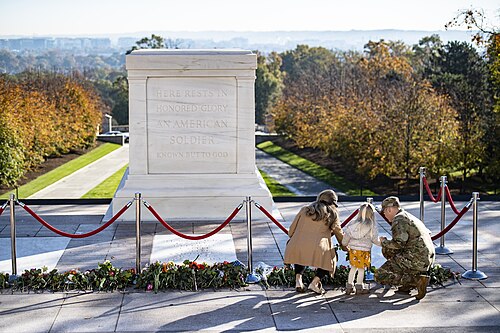
At the heart of Arlington National Cemetery stands the white marble —dedicated on Armistice Day, November 11, 1921—bearing the inscription: "Here rests in honored glory an American soldier known but to God." Every hour of every day—24 hours a day, 365 days a year, through blazing heat, rain, and blizzards since 1937—elite U.S. Army Sentinels from the 3rd U.S. Infantry Regiment ("") guard the Tomb! Each Sentinel takes exactly 21 slow steps down the black mat, pauses for 21 seconds, turns, pause for 21 seconds, and walks 21 steps back—symbolizing the nation’s highest military honor, the 21-gun salute! Below shines the at the gravesite of President John F. Kennedy, alongside memorials to the Space Shuttle Challenger and Columbia astronauts, the Tuskegee Airmen, Supreme Court Justice Thurgood Marshall, and heavyweight boxing champion and WWII veteran Joe Louis.
Understanding how Arlington National Cemetery: America's Hallowed Ground functions in real environments also involves (thuh ohld gard): The 3rd U.S. Infantry Regiment (founded in 1784, the oldest active-duty infantry unit in the Army), whose Sentinels guard the Tomb 24 hours a day, 365 days a year. Even when surrounding conditions shift across seasons or regions, the interaction between , The Old Guard, and helps sustain balance and resilience in the wider environment.
Global & Practical Significance: Every movement of the Tomb Guard follows a precise 21-count cadence honoring the 21-gun salute. Furthermore, at Arlington became a nationally famous community of self-reliance and education, with over 3,800 residents honored in Section 27.
Amazing Facts
1. Remarkable Scale & Numbers: Why does a Tomb Guard Sentinel take 21 steps and wait 21 seconds at each turn at the ? It echoes the 21-gun salute, the highest military honor given to heads of state and fallen heroes! This discovery highlights why Tomb of the Unknown Soldier is central to understanding Arlington National Cemetery: America's Hallowed Ground.
2. Extraordinary Adaptation & Design: Tomb Guards never wear rank insignia on their uniform jackets while guarding the Tomb—so that no Sentinel ever outranks the Unknown Soldiers resting inside! Specialized conditions involving make these adaptations possible.
3. Surprising Scientific & Historical Record: When Robert E. Lee’s family evacuated in May 1861, enslaved housekeeper Selina Gray was entrusted with the house keys; when Union soldiers arrived, she courageously stood up to protect George Washington’s priceless Mount Vernon heirlooms inside the mansion! Over time, processes linked to leave a lasting mark across 🔔 Revolution, Statehood & Civil War Turning Points.
Read & Review
Chapter Synthesis: Throughout this investigation of Arlington National Cemetery: America's Hallowed Ground in History (American & Virginia) (🔔 Revolution, Statehood & Civil War Turning Points), we examined its core foundations, defining traits, step-by-step mechanisms, and real-world connections using key terms like , , and .
Academic Vocabulary Review: • (toom uv thuh un-NOHN SOHL-jer): The white marble monument at Arlington National Cemetery dedicated in 1921 to honor unidentified American service members who gave their lives in war. • (thuh ohld gard): The 3rd U.S. Infantry Regiment (founded in 1784, the oldest active-duty infantry unit in the Army), whose Sentinels guard the Tomb 24 hours a day, 365 days a year. • (FREED-menz VIL-ij): The model community established on the Arlington estate in May 1863 where over 1,100 newly emancipated African Americans built homes, schools, and businesses.
Critical Thinking Check: (1) Why do the U.S. Army Sentinels guarding the walk exactly 21 steps and pause for exactly 21 seconds before turning? — To symbolize the 21-gun salute, the highest military honor in the United States. (2) What was "," established on the grounds of the Arlington estate in May 1863? — A thriving community with schools, hospitals, churches, and homes where over 1,100 newly emancipated African Americans lived and worked for nearly 30 years.