Introduction
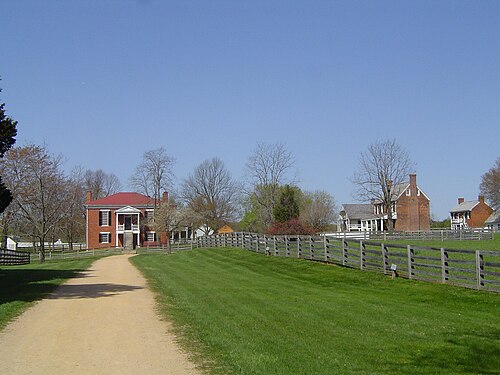
In the rolling Piedmont hills of central Virginia sits a quiet 19th-century village of 27 brick and wooden buildings where four years of devastating Civil War finally came to a peaceful close: Appomattox Court House National Historical Park! Here, on Palm Sunday, April 9, 1865, Confederate General Robert E. Lee surrendered the Army of Northern Virginia to Union General Ulysses S. Grant inside the parlor of the .
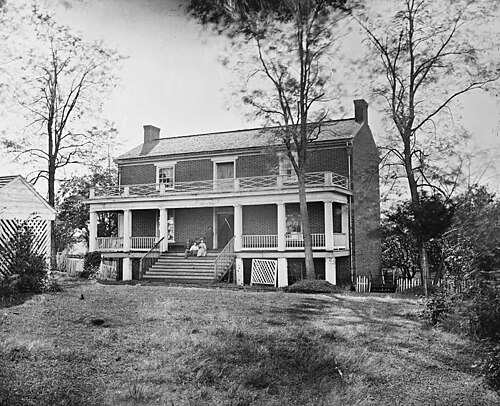
A foundational concept in this investigation is (pronounced muh-KLAYN hows), which refers to: The 1848 brick home of Wilmer McLean in the village of Appomattox Court House where General Robert E. Lee surrendered to General Ulysses S. Grant on April 9, 1865. Every part of Appomattox Court House: Where the Nation Reunited within 🔔 Revolution, Statehood & Civil War Turning Points builds upon this essential concept.
At the Grade 4 level of History (American & Virginia) (🔔 Revolution, Statehood & Civil War Turning Points), researchers compare structure, function, and environmental context to see how , , and shape measurable outcomes.
Key Features
Notice the name carefully: in 19th-century Virginia, the phrase "Court House" was often used as the name of an entire county-seat village (so Appomattox Court House is the name of the town itself, centered around its brick county courthouse!). In the first week of April 1865, after Union forces broke through the siege lines at Petersburg and Richmond, General Lee marched his exhausted, starving army westward along the Appomattox River hoping to reach supply trains at Appomattox Station.
To analyze these defining traits accurately, specialists examine (puh-ROHL pas): One of the 28,231 printed paper certificates issued at Clover Hill Tavern guaranteeing a surrendering soldier safe passage home and protection from arrest. Alongside (The 1848 brick home of Wilmer McLean in the village of Appomattox Court House where General Robert E. Lee surrendered to General Ulysses S. Grant on April 9, 1865.), these specialized characteristics set Appomattox Court House: Where the Nation Reunited apart within 🔔 Revolution, Statehood & Civil War Turning Points.
Field Observation & Evidence: Researchers studying Appomattox Court House: Where the Nation Reunited observe how physical form matches function in History (American & Virginia). Each observable feature provides a clear advantage that supports stability, survival, or performance across changing conditions.
How It Works
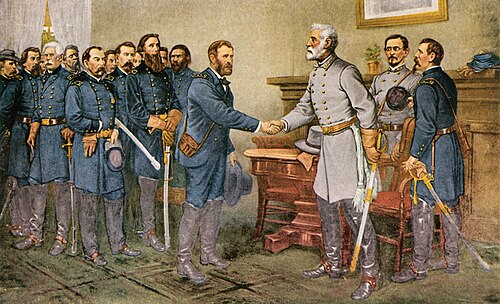
General Ulysses S. Grant’s Union cavalry and infantry—including Several regiments of (USCT) who marched all night on April 8–9!—raced ahead and blocked Lee’s path on the morning of April 9, 1865. Surrounded on three sides with no food left for his men, Lee declared: "There is nothing left me to do but to go and see General Grant." At 1:30 PM inside Wilmer McLean’s brick parlor, Lee arrived in a crisp dress uniform with a jeweled sword, while Grant arrived straight from the field in a mud-splattered private’s coat with three stars stitched on his shoulders! Following President Abraham Lincoln’s wish to bind up the nation’s wounds ("with malice toward none"), Grant wrote extraordinarily generous, honorable terms of surrender!
This step-by-step process relies on (pronounced mag-nuh-NIM-ih-tee), defined as: Generosity and forgiveness shown by a victor toward a defeated opponent—exemplified by Grant’s peaceful surrender terms at Appomattox. Each stage of the process prepares the way for the next phase to unfold.
Cause-and-Effect Balance: When conditions remain balanced, and interact inside the to keep the system running smoothly. If any single link in this sequence is disrupted, the entire pace of activity shifts.
In Our World
What were Grant’s surrender terms at Appomattox? Instead of marching Confederate soldiers off to prison camps or putting them on trial for treason, Grant promised that every officer and soldier who signed a pledge not to take up arms again could return home in peace without being disturbed by U.S. authorities, officers could keep their sidearms, and every soldier who owned a horse or mule could take his animal home to plow his farm for spring planting! Across the street inside Clover Hill Tavern, Union army printers worked night and day on rapid field presses to print 28,231 individual paper Parole Passes—and on April 12, 1865, Union General Joshua Lawrence Chamberlain ordered his soldiers to salute the surrendering Confederates as brothers in a reunited nation!
Understanding how Appomattox Court House: Where the Nation Reunited functions in real environments also involves (puh-ROHL pas): One of the 28,231 printed paper certificates issued at Clover Hill Tavern guaranteeing a surrendering soldier safe passage home and protection from arrest. Even when surrounding conditions shift across seasons or regions, the interaction between , Parole Pass, and helps sustain balance and resilience in the wider environment.
Global & Practical Significance: Because April 9, 1865 was Palm Sunday, the county courthouse was locked, so Wilmer McLean offered his brick parlor for the meeting between Grant and Lee. Furthermore, Grant’s terms honored President Lincoln’s goal of reuniting the country without vengeance, setting the model for subsequent Confederate surrenders.
Amazing Facts
1. Remarkable Scale & Numbers: When General Lee told General Grant that in the Confederate army the cavalrymen and artillerymen owned their own horses, Grant immediately ordered that every man who claimed a horse or mule be allowed to take it home "to work their little farms" so their families wouldn’t starve! This discovery highlights why is central to understanding Appomattox Court House: Where the Nation Reunited.
2. Extraordinary Adaptation & Design: When joyous Union soldiers began firing celebratory cannon salutes after Lee rode away from the , General Grant ordered the firing stopped immediately, saying: "The Confederates were now our prisoners, and we did not want to exult over their downfall." Specialized conditions involving make these adaptations possible.
3. Surprising Scientific & Historical Record: Seven regiments of (USCT)—many of them formerly enslaved men fighting for freedom and Union—marched through the night to help cut off Lee’s final escape route on the morning of April 9, 1865! Over time, processes linked to leave a lasting mark across 🔔 Revolution, Statehood & Civil War Turning Points.
Read & Review
Chapter Synthesis: Throughout this investigation of Appomattox Court House: Where the Nation Reunited in History (American & Virginia) (🔔 Revolution, Statehood & Civil War Turning Points), we examined its core foundations, defining traits, step-by-step mechanisms, and real-world connections using key terms like , , and .
Academic Vocabulary Review: • (muh-KLAYN hows): The 1848 brick home of Wilmer McLean in the village of Appomattox Court House where General Robert E. Lee surrendered to General Ulysses S. Grant on April 9, 1865. • (puh-ROHL pas): One of the 28,231 printed paper certificates issued at Clover Hill Tavern guaranteeing a surrendering soldier safe passage home and protection from arrest. • (mag-nuh-NIM-ih-tee): Generosity and forgiveness shown by a victor toward a defeated opponent—exemplified by Grant’s peaceful surrender terms at Appomattox.
Critical Thinking Check: (1) What is "Appomattox Court House," where the main surrender of the American Civil War took place on April 9, 1865? — The name of an entire 19th-century Virginia village (not just one courthouse building), where Lee surrendered to Grant inside the private home of Wilmer McLean. (2) Why were General Ulysses S. Grant’s surrender terms at Appomattox considered a model of generosity and national healing? — Soldiers were paroled to go home in peace rather than imprisoned, fed Union rations, and allowed to keep their horses and mules to plant spring crops for their families.