Introduction
Not every animal can outrun a wolf or mountain lion! Slow-moving mammals like the striped skunk and the North American porcupine stay safe using bold warning signals, chemical sprays, and thousands of needle-sharp quills.
A foundational concept in this investigation is (pronounced kwil), which refers to: A hollow, stiff, needle-sharp spine made of keratin hair that detaches when a porcupine is touched. Every part of Animal Defense Mechanisms: Skunks & Porcupines within Animal Behavior & Working Animals builds upon this essential concept.
In Grade 5 advanced nonfiction inquiry across Animals (Animal Behavior & Working Animals), synthesizing primary evidence around , , and reveals how complex systems operate and adapt over time.
Key Features
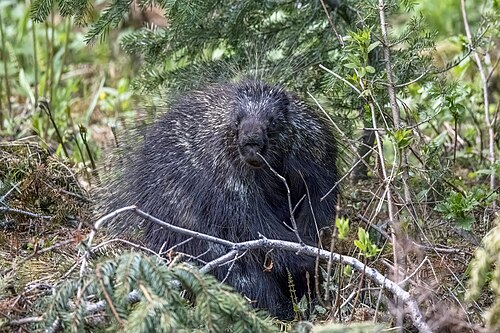
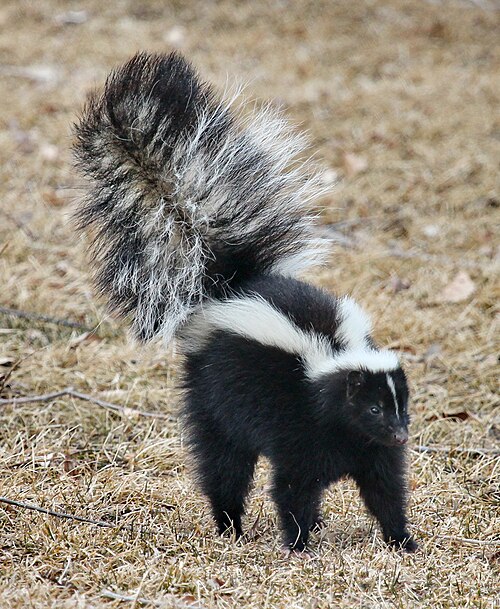
A striped skunk’s bold black-and-white coat is nature’s stop sign. A North American porcupine wears a coat of about 30,000 hollow, sharp quills—modified hairs stiffened with keratin—across its back, sides, and muscular tail.
To analyze these defining traits accurately, specialists examine (THY-ol): A sulfur-containing organic compound in skunk spray that produces an intensely foul odor. Alongside (A hollow, stiff, needle-sharp spine made of keratin hair that detaches when a porcupine is touched.), these specialized characteristics set Animal Defense Mechanisms: Skunks & Porcupines apart within Animal Behavior & Working Animals.
Field Observation & Evidence: Researchers studying Animal Defense Mechanisms: Skunks & Porcupines observe how physical form matches function in Animals. Each observable feature provides a clear advantage that supports stability, survival, or performance across changing conditions.
How It Works
A skunk always warns predators first by stomping its front feet, hissing, and raising its bushy tail. If the predator does not back away, two glands near the skunk’s tail spray an oily sulfur chemical (thiols) accurately up to 3 meters (10 feet)! Contrary to myth, porcupines cannot "shoot" their quills; instead, the quills detach easily on contact and have microscopic backward-pointing barbs.
This step-by-step process relies on (pronounced WOR-ning dis-PLAY), defined as: Actions like foot-stomping, tail-raising, or rattling quills that warn a predator to stay back before an attack. Each stage of the process prepares the way for the next phase to unfold.
Cause-and-Effect Balance: When conditions remain balanced, and interact inside the to keep the system running smoothly. If any single link in this sequence is disrupted, the entire pace of activity shifts.
In Our World
Only one forest predator—the agile fisher (a member of the weasel family)—regularly hunts porcupines by circling their -free face. Great horned owls, which have almost no sense of smell, are the primary predator of striped skunks.
Understanding how Animal Defense Mechanisms: Skunks & Porcupines functions in real environments also involves (THY-ol): A sulfur-containing organic compound in skunk spray that produces an intensely foul odor. Even when surrounding conditions shift across seasons or regions, the interaction between , Thiol, and helps sustain balance and resilience in the wider environment.
Global & Practical Significance: Porcupines cannot launch quills; loose barbed quills release upon physical contact. Furthermore, Bold black-and-white aposematic coloration warns predators to stay away before the skunk has to waste its spray.
Amazing Facts
1. Remarkable Scale & Numbers: A skunk’s sulfur spray is so potent that a human nose can smell it from 1.5 kilometers (nearly 1 mile) away downwind! This discovery highlights why is central to understanding Animal Defense Mechanisms: Skunks & Porcupines.
2. Extraordinary Adaptation & Design: Porcupine quills are coated with natural antibiotic fatty acids so that if a climbing porcupine falls out of a tree and pokes itself, it doesn’t get an infection. Specialized conditions involving make these adaptations possible.
3. Surprising Scientific & Historical Record: Each porcupine tip is covered in 800 microscopic backward-facing scales that make it work like a tiny ratchet. Over time, processes linked to leave a lasting mark across Animal Behavior & Working Animals.
Read & Review
Chapter Synthesis: Throughout this investigation of Animal Defense Mechanisms: Skunks & Porcupines in Animals (Animal Behavior & Working Animals), we examined its core foundations, defining traits, step-by-step mechanisms, and real-world connections using key terms like , , and .
Academic Vocabulary Review: • (kwil): A hollow, stiff, needle-sharp spine made of keratin hair that detaches when a porcupine is touched. • (THY-ol): A sulfur-containing organic compound in skunk spray that produces an intensely foul odor. • (WOR-ning dis-PLAY): Actions like foot-stomping, tail-raising, or rattling quills that warn a predator to stay back before an attack.
Critical Thinking Check: (1) Can a porcupine throw or shoot its quills through the air at a predator? — No—quills detach only when a predator touches the porcupine or gets swiped by its tail. (2) Why is a striped skunk colored bold black and white? — To warn predators from afar that it has a powerful chemical defense.