Introduction
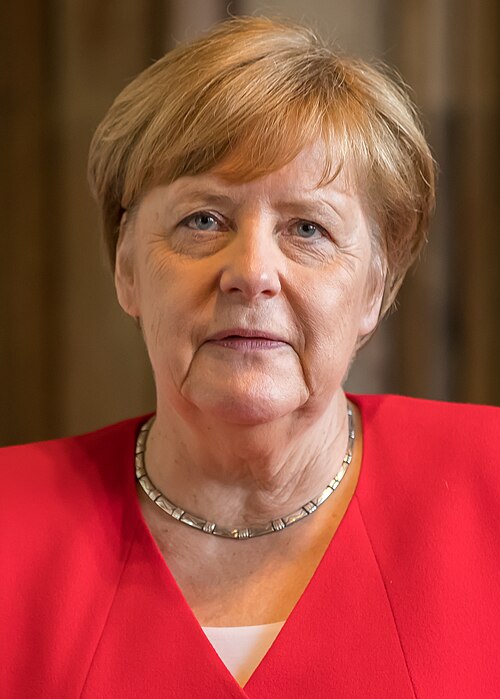
Before entering politics, Angela Merkel (born 1954) was a research scientist with a doctorate (PhD) in ! After the Fall of the Berlin Wall in 1989 reunited East and West Germany, she traded her science laboratory for public service—becoming the first female Chancellor of Germany and serving for 16 consecutive years (2005–2021) as one of Europe’s longest-serving and calmest crisis leaders!
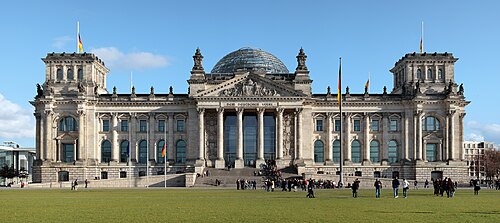
A foundational concept in this investigation is Chancellor (Bundeskanzlerin) (pronounced CHAN-suh-ler), which refers to: The head of government and chief executive leader of the Federal Republic of Germany, elected by the (parliament). Every part of Angela Merkel: Scientist & Chancellor of Germany within 🌍 World Leaders, Statesmen & Global Voices builds upon this essential concept.
In Grade 3 Famous People (Movers & Shakers) studies (🌍 World Leaders, Statesmen & Global Voices), understanding how Chancellor (Bundeskanzlerin), German Reunification (1990), and work together helps explain real-world patterns. As you read each chapter, notice how these key terms connect structure, process, and environment.
Key Features
Born in Hamburg, West Germany, on July 17, 1954, Angela Kasner moved as a three-month-old baby with her family to East Germany (the German Democratic Republic) when her father, a Lutheran pastor, accepted a rural church post in Brandenburg. Growing up behind the Iron Curtain in the town of Templin, young Angela excelled at mathematics and Russian language competitions, studied physics at the University of Leipzig (1973–1978), and earned her PhD in at the Academy of Sciences in East Berlin in 1986.
To analyze these defining traits accurately, specialists examine German Reunification (1990) (ree-yoo-nuh-fih-KAY-shuhn): The peaceful uniting of communist East Germany and democratic West Germany into one nation on October 3, 1990, following the fall of the Berlin Wall. Alongside Chancellor (Bundeskanzlerin) (The head of government and chief executive leader of the Federal Republic of Germany, elected by the (parliament).), these specialized characteristics set Angela Merkel: Scientist & Chancellor of Germany apart within 🌍 World Leaders, Statesmen & Global Voices.
Field Observation & Evidence: Researchers studying Angela Merkel: Scientist & Chancellor of Germany observe how physical form matches function in Famous People (Movers & Shakers). Each observable feature provides a clear advantage that supports stability, survival, or performance across changing conditions.
How It Works
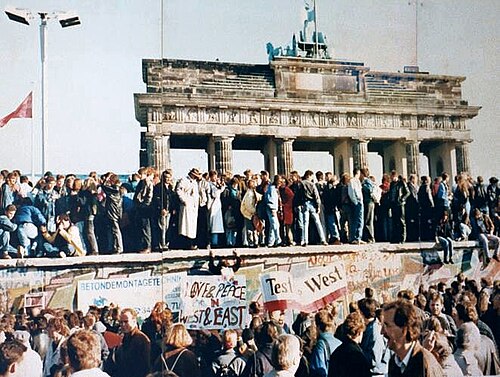
On the night of November 9, 1989, when the Berlin Wall suddenly opened after 28 years of dividing Berlin in two, 35-year-old Dr. Merkel walked across the border into West Berlin to celebrate! Inspired by the peaceful democratic revolution, she joined the newly formed democratic movement, won a seat in the reunited German Parliament () in 1990, and served as Minister for Women and Youth and later as Environment Minister (where she chaired the 1995 Berlin UN Climate Conference).
This step-by-step process relies on (pronounced KWON-tuhm KEM-ih-stree), defined as: The branch of science that uses quantum physics to study how atoms and subatomic particles bond and react inside molecules. Each stage of the process prepares the way for the next phase to unfold.
Cause-and-Effect Balance: When conditions remain balanced, Chancellor (Bundeskanzlerin) and interact inside the German Reunification (1990) to keep the system running smoothly. If any single link in this sequence is disrupted, the entire pace of activity shifts.
In Our World
Elected Chancellor of Germany in November 2005, Merkel applied the scientific method to governing: gathering facts carefully, staying calm under pressure, and building consensus across the 27-nation European Union. Known affectionately by Germans as "Mutti" ("Mom") and famous for her trademark diamond-shaped hand gesture (the Merkel-Raute), she steered Germany and Europe through the 2008 financial crisis, the Eurozone crisis, clean-energy transitions (Energiewende), and the 2020 COVID-19 pandemic before stepping down voluntarily after four full terms in 2021.
Understanding how Angela Merkel: Scientist & Chancellor of Germany functions in real environments also involves German Reunification (1990) (ree-yoo-nuh-fih-KAY-shuhn): The peaceful uniting of communist East Germany and democratic West Germany into one nation on October 3, 1990, following the fall of the Berlin Wall. Even when surrounding conditions shift across seasons or regions, the interaction between Chancellor (Bundeskanzlerin), German Reunification (1990), and helps sustain balance and resilience in the wider environment.
Global & Practical Significance: Merkel studied physics at the University of Leipzig and earned her doctorate in in 1986. Furthermore, Merkel was Germany’s first woman Chancellor and served four full terms from 2005 to 2021.
Amazing Facts
1. Remarkable Scale & Numbers: Before entering politics at age 35, Angela Merkel was a quantum chemist who published scientific research papers on how molecules and chemical bonds react! This discovery highlights why Chancellor (Bundeskanzlerin) is central to understanding Angela Merkel: Scientist & Chancellor of Germany.
2. Extraordinary Adaptation & Design: When young Angela was afraid to jump off the high diving board during school swimming class, she stood on the board for 45 minutes until the school bell rang and finally jumped—a habit of careful deliberation she kept throughout her life! Specialized conditions involving German Reunification (1990) make these adaptations possible.
3. Surprising Scientific & Historical Record: Merkel served 16 years and 16 days as Chancellor of Germany (2005–2021), working alongside four different U.S. Presidents, four French Presidents, and five British Prime Ministers! Over time, processes linked to leave a lasting mark across 🌍 World Leaders, Statesmen & Global Voices.
Read & Review
Chapter Synthesis: Throughout this investigation of Angela Merkel: Scientist & Chancellor of Germany in Famous People (Movers & Shakers) (🌍 World Leaders, Statesmen & Global Voices), we examined its core foundations, defining traits, step-by-step mechanisms, and real-world connections using key terms like Chancellor (Bundeskanzlerin), German Reunification (1990), and .
Academic Vocabulary Review: • Chancellor (Bundeskanzlerin) (CHAN-suh-ler): The head of government and chief executive leader of the Federal Republic of Germany, elected by the (parliament). • German Reunification (1990) (ree-yoo-nuh-fih-KAY-shuhn): The peaceful uniting of communist East Germany and democratic West Germany into one nation on October 3, 1990, following the fall of the Berlin Wall. • (KWON-tuhm KEM-ih-stree): The branch of science that uses quantum physics to study how atoms and subatomic particles bond and react inside molecules.
Critical Thinking Check: (1) What was Angela Merkel’s profession before the fall of the Berlin Wall in 1989 inspired her to enter democratic politics? — She was a physicist and research scientist with a PhD in . (2) What historic milestone did Angela Merkel achieve when she took office in November 2005? — She became the first female Chancellor of Germany (and the first Chancellor who grew up in East Germany).