Introduction
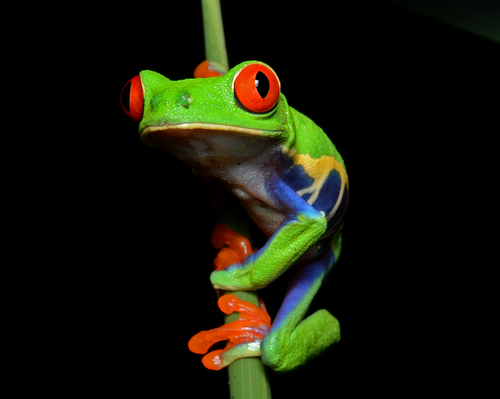
More than 6,300 species of amphibians live on Earth today. The word comes from Greek words meaning "both lives" because most amphibians start life in fresh water as gill-breathing larvae before growing lungs to live on land.
A foundational concept in this investigation is (pronounced am-FIB-ee-uhn), which refers to: A cold-blooded vertebrate that begins life in water with gills and develops lungs as an adult. Every part of Amphibians within Classification & Anatomy builds upon this essential concept.
In Grade 3 Animals studies (Classification & Anatomy), understanding how , , and work together helps explain real-world patterns. As you read each chapter, notice how these key terms connect structure, process, and environment.
Key Features
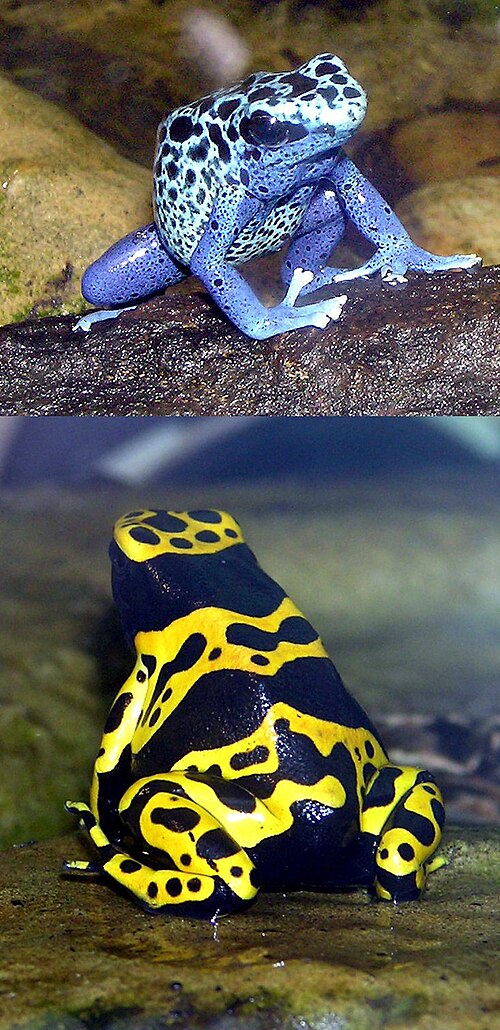
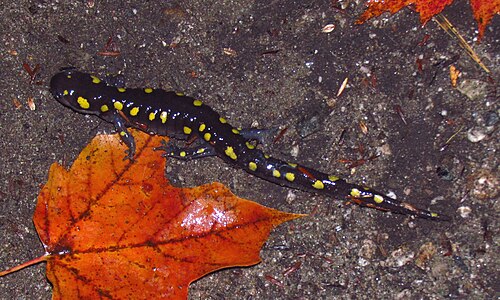
Scientists classify amphibians into three groups: frogs and toads (tailless adults with strong jumping hind legs), salamanders and newts (which keep their tails all their lives), and caecilians—legless, burrowing amphibians that look like slick earthworms.
To analyze these defining traits accurately, specialists examine (see-SIL-yuhn): A legless, worm-like tropical that burrows in moist soil. Alongside Amphibian (A cold-blooded vertebrate that begins life in water with gills and develops lungs as an adult.), these specialized characteristics set Amphibians apart within Classification & Anatomy.
Field Observation & Evidence: Researchers studying Amphibians observe how physical form matches function in Animals. Each observable feature provides a clear advantage that supports stability, survival, or performance across changing conditions.
How It Works
Amphibians lack scales, feathers, or fur. Their thin, permeable skin is coated with mucus so they can absorb water and breathe oxygen directly through their skin (cutaneous respiration). During , a swimming tadpole resorbs its tail and grows four legs and lungs.
This step-by-step process relies on (pronounced meh-tuh-MOR-fuh-sis), defined as: A dramatic body transformation as an animal develops from a larva (tadpole) into an adult. Each stage of the process prepares the way for the next phase to unfold.
Cause-and-Effect Balance: When conditions remain balanced, and interact inside the to keep the system running smoothly. If any single link in this sequence is disrupted, the entire pace of activity shifts.
In Our World
Because amphibians absorb water and air directly across their sensitive skin, ecologists call them bio-indicators. When frogs and salamanders thrive in a pond or forest, it shows that the water and ecosystem are clean and healthy.
Understanding how Amphibians functions in real environments also involves (see-SIL-yuhn): A legless, worm-like tropical that burrows in moist soil. Even when surrounding conditions shift across seasons or regions, the interaction between Amphibian, Caecilian, and helps sustain balance and resilience in the wider environment.
Global & Practical Significance: Caecilians are limbless amphibians adapted for burrowing underground. Furthermore, Because amphibians breathe and drink through their skin, they quickly reflect ecosystem health.
Amazing Facts
1. Remarkable Scale & Numbers: The Goliath frog of West Africa is the largest frog on Earth—it can grow over 30 centimeters long and weigh as much as a house cat! This discovery highlights why is central to understanding Amphibians.
2. Extraordinary Adaptation & Design: When a frog swallows a big insect, it blinks its giant eyeballs downward into the roof of its mouth to help push the food down its throat. Specialized conditions involving make these adaptations possible.
3. Surprising Scientific & Historical Record: Wood frogs in Alaska can survive having 65% of their body water freeze solid in winter, then thaw out and hop away in spring! Over time, processes linked to leave a lasting mark across Classification & Anatomy.
Read & Review
Chapter Synthesis: Throughout this investigation of Amphibians in Animals (Classification & Anatomy), we examined its core foundations, defining traits, step-by-step mechanisms, and real-world connections using key terms like , , and .
Academic Vocabulary Review: • (am-FIB-ee-uhn): A cold-blooded vertebrate that begins life in water with gills and develops lungs as an adult. • (see-SIL-yuhn): A legless, worm-like tropical amphibian that burrows in moist soil. • (meh-tuh-MOR-fuh-sis): A dramatic body transformation as an animal develops from a larva (tadpole) into an adult.
Critical Thinking Check: (1) Which group of amphibians has no legs and looks like a slick worm? — Caecilians. (2) Why do scientists call amphibians "bio-indicators"? — Their permeable skin is sensitive to pollution, warning scientists early if water or air is dirty.