Introduction
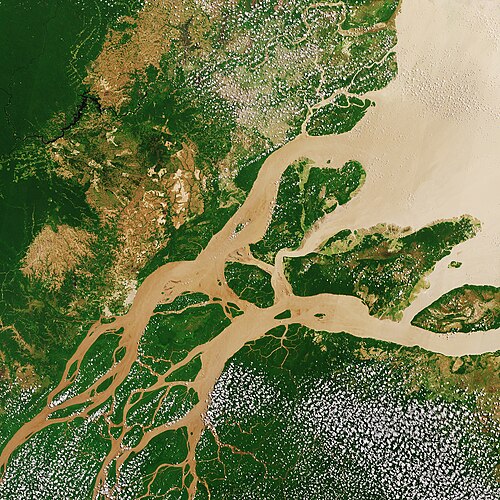
Carrying more fresh water than the next seven largest rivers on Earth combined, the mighty Amazon River winds 6,400 kilometers (4,000 miles) from the snow-capped Andes Mountains across South America to the Atlantic Ocean! Every rainy season, the river rises by 9 to 15 meters (30 to 50 feet) and spills over its banks for months—transforming over 250,000 square kilometers of jungle into a magical underwater world called the Flooded Forest ( and Igapó)!
An important word to know in this book is (VAR-zee-uh). Várzea means: Seasonal floodplain rainforest along the Amazon River that is submerged under 30 to 50 feet of nutrient-rich water for months each year. Learning about Várzea helps us understand how Amazon River Basin: The Flooded Forest fits into 🌴 World Biomes: Savannas, Jungles & Rainforests.
Key Features
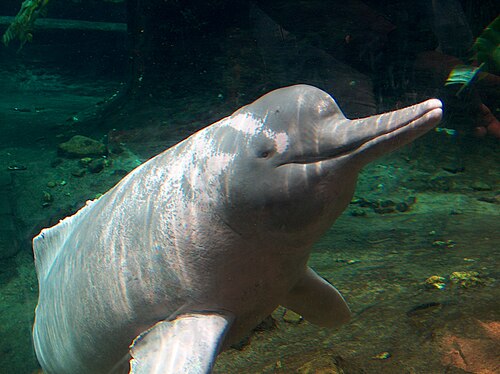
Imagine paddling a canoe right through the middle of the treetops while fish swim between tree trunks and fruit drops straight into the water! In these flooded forests lives the legendary Amazon River Dolphin (Inia geoffrensis), known locally as the —the largest freshwater dolphin on Earth, famous for its bubblegum-pink skin and an unfused neck vertebra that lets it turn its head 90 degrees left and right to weave between submerged tree trunks!
Scientists and explorers also look closely at (BOH-toh), which means: The Pink Amazon River Dolphin, adapted with a flexible neck, broad paddle flippers, and precision sonar for navigating flooded trees. These special traits make Amazon River Basin: The Flooded Forest easy to spot and study.

How It Works
When the forest floods, trees and fish form an astonishing partnership called (seed dispersal by fish)! Rubber trees and palms drop ripe fruits and nuts into the rising water; giant fruit-eating fish like the Tambaqui (a 30-kilogram cousin of the piranha with human-like molar teeth!) crunch the fruit and swim miles away before pooping out the intact seeds into fertile river mud as the floodwaters recede!
Here is another helpful term: (ik-thee-OK-uh-ree). It means: Seed dispersal by fish—such as Amazonian tambaqui fish eating fallen tree fruit and spreading the seeds across the floodplain. Step by step, and Ichthyochory work together in nature.
In Our World
In sunlit oxbow lakes along the Amazon float giant platter-shaped leaves of the Giant Water Lily (Victoria amazonica), measuring up to 3 meters (10 feet) across with upturned rims and air-filled ribs on the underside so buoyant they can hold the weight of a 40-kilogram (90-pound) child without sinking! Beneath those lily pads patrol red-bellied piranhas, electric eels (which can discharge 600 to 860 volts!), black caimans, giant river otters, and the —an armor-scaled giant fish up to 3 meters long that gulps air at the surface with a lung-like swim bladder!
Understanding how Amazon River Basin: The Flooded Forest works in our world also involves (BOH-toh): The Pink Amazon River Dolphin, adapted with a flexible neck, broad paddle flippers, and precision sonar for navigating flooded trees. Even when surrounding conditions shift across seasons or regions, the interaction between , Boto, and helps sustain balance and resilience in the wider environment.
Amazing Facts
Amazing Fact #1: One out of every five drops (20%) of all liquid fresh water flowing into Earth’s oceans comes from the Amazon River alone!
Amazing Fact #2: Unlike ocean dolphins whose neck bones are fused stiff for speed, Pink Amazon River Dolphins have flexible necks so they can bend around tree trunks in the flooded forest!
Amazing Fact #3: The Giant Amazon Water Lily (Victoria amazonica) has a structural web of hollow, air-filled ribs underneath each 10-foot leaf that inspired the iron-and-glass architecture of London’s famous Crystal Palace!
Read & Review
Let's review what we discovered about Amazon River Basin: The Flooded Forest! In this book, we explored how , , and connect to 🌴 World Biomes: Savannas, Jungles & Rainforests.
Key Question #1: What happens in the Amazon’s "Flooded Forest" ( and Igapó) during the annual rainy season? Answer: The river rises 30 to 50 feet and floods the jungle floor for months, allowing dolphins, caimans, and fruit-eating fish to swim right among the tree trunks. Seasonal flooding connects the river and forest ecosystems so aquatic animals forage directly in the flooded canopy.
Key Question #2: What special skeletal adaptation lets the Pink Amazon River Dolphin () maneuver tightly between submerged tree branches? Answer: Unfused neck vertebrae that let it turn its head 90 degrees side-to-side, plus wide paddle-like flippers that can row forward and backward. Unlike open-ocean dolphins with fused necks, river dolphins need slow-speed agility to hunt among tangled roots and trunks.